Feed & Nutrition Guidance, Research & FAQs
Explore practical guidance, technical insights and frequently asked questions covering animal feed and nutrition.
From protein utilisation and rumen-protected nutrients to feed efficiency, ingredient performance and species-specific nutrition, this resource area is designed to explain key topics clearly and help support informed feeding decisions.
We’ll continue to add new articles, FAQs, technical information and research covering ruminant, pig and poultry nutrition.
Rumen-Protected Protein: 3 Common Questions Answered
From customer conversations to online discussions, the same questions about rumen-protected protein often crop up. Here are three of the most common we hear - with the answers you’re looking for!
Nature is remarkably effective, but it doesn’t always use every nutrient in the most productive way for a high-performing animal. The rumen does an essential job, and we still want to feed its microbes properly — but if too much valuable dietary protein is broken down there, less reaches the small intestine intact.
Rumen protection helps divert a greater proportion of that protein past the rumen, so it can be digested later into amino acids and used more directly for productive functions such as milk protein production, growth and body tissue.
So it’s not about bypassing the rumen altogether — it’s about helping more of the right nutrients reach the place where the animal can make best use of them.
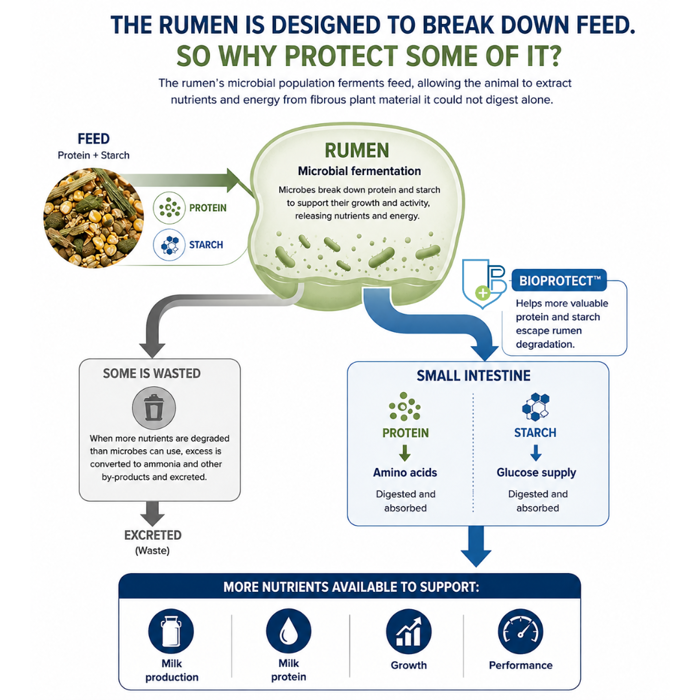
More protein in the ration doesn’t automatically mean more protein available to the animal. If extra protein is broken down in the rumen beyond what the microbes can effectively use, some of that nitrogen can ultimately be lost rather than converted into productive output.
The aim is therefore not simply to feed more protein, but to make better use of the protein already being fed — supporting the rumen microbes while increasing the amount of useful dietary protein that reaches the small intestine.
Yes. Effective rumen protection isn’t simply about making as much protein as possible resistant to rumen degradation. A proportion of dietary protein still needs to be available in the rumen to support microbial activity, while another proportion should escape rumen breakdown and remain digestible further along the digestive tract.
The aim is therefore to achieve the right balance: supporting the rumen microbes while also increasing the supply of useful protein and amino acids available to the animal in the small intestine.
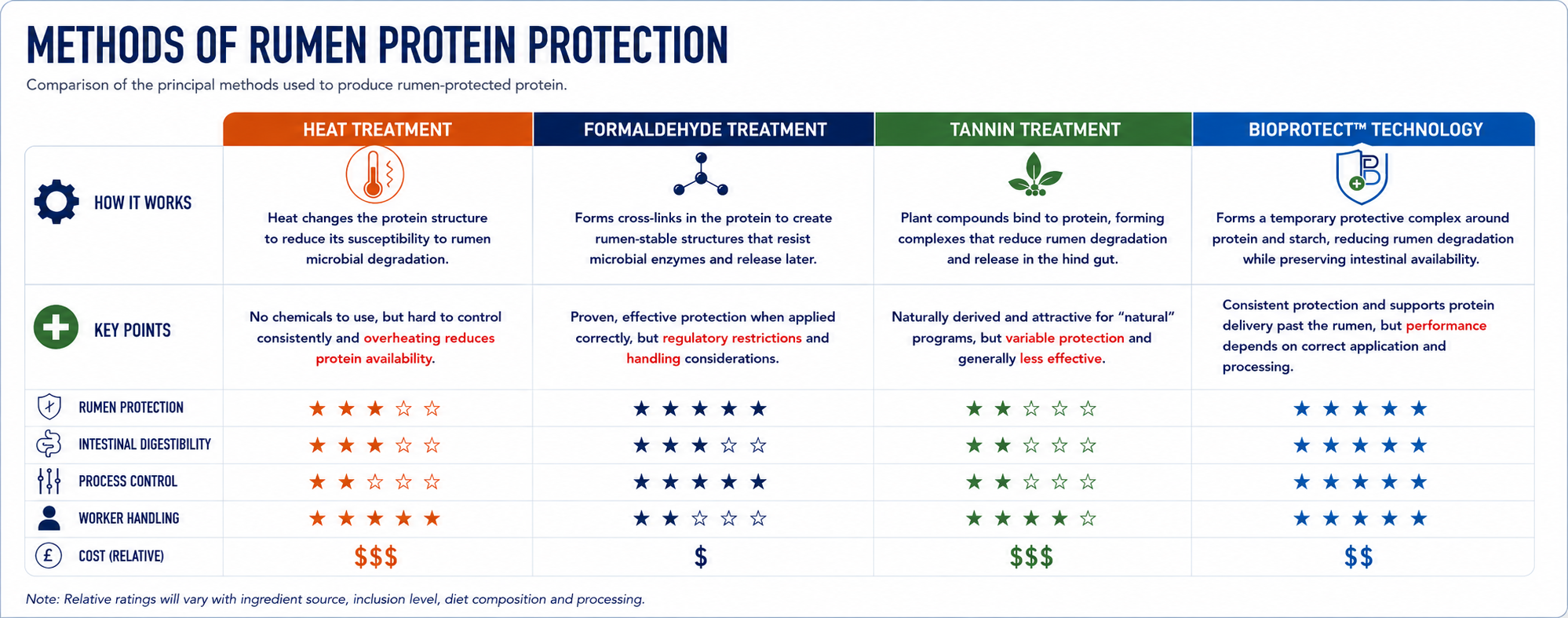
And that’s where the method of protection matters. Heat treatment can increase rumen escape, but excessive or poorly controlled heating can damage protein and reduce its nutritional availability. Plant-derived approaches such as tannins can also protect protein, but their effects can vary with the source, type and amount used — and excessive binding can reduce subsequent digestibility.
The aim is controlled protection: enough to reduce unnecessary breakdown in the rumen, without protecting the protein so strongly that the animal can’t make good use of it afterwards.
🛡️ BioProtect™ is designed to help achieve that balance — protecting valuable dietary nutrients through the rumen so more can reach the small intestine for digestion and utilisation, without stopping normal rumen fermentation or simply locking nutrients up so they pass through unused.
Because effective protein nutrition isn't simply about how much protein is in the ration. It's about where it is digested and how well it can be used.
Methods of Rumen Protection
Not all rumen protein protection technologies are created equal.
Protecting nutrients from rumen degradation is crucial for efficient feeding. But the method used can have a major impact on protection consistency, intestinal digestibility, process control, handling requirements and cost. Some approaches can even reduce protein quality if not carefully controlled.
This technical comparison explores four of the principal approaches to rumen nutrient protection, including the latest formaldehyde-free BioProtect™ Technology.
Find out more about BioProtect™ rumen-protected nutrition →